Have you ever been to a meeting where the right people are in the room, the topic genuinely matters, and yet somehow the conversation never quite goes where it should? A few voices (usually the most senior ones) end up doing most of the talking, and you spend the session waiting for an opening… but it never comes. Then the notes arrive a few days later, and they are accurate. But if you read them carefully, you will notice that what was agreed looks a lot like what the most confident people in the room already thought before they sat down.
If you work in higher education or civil society, you are probably familiar with this scenario. The reasons rarely come down to bad faith or insufficient motivation. More often, it is a failure of design. Without careful structure, familiar hierarchies tend to reassert themselves, and the voices that already carry the most institutional weight come to dominate. What might have become shared reasoning stays at the level of individual observation, and the conversation closes without having changed much.
The COCO consortium’s Guidelines for Deliberative Mini-Publics (DMPs) were developed as a direct response to this pattern, offering a method for creating, through deliberate design, the conditions under which something different becomes possible.
The guidelines are structured around three phases: Before the DMP (preparation), During the DMP (facilitation), and After the DMP (follow-up), because how a session is designed before anyone enters the room is just as consequential as what happens during it.
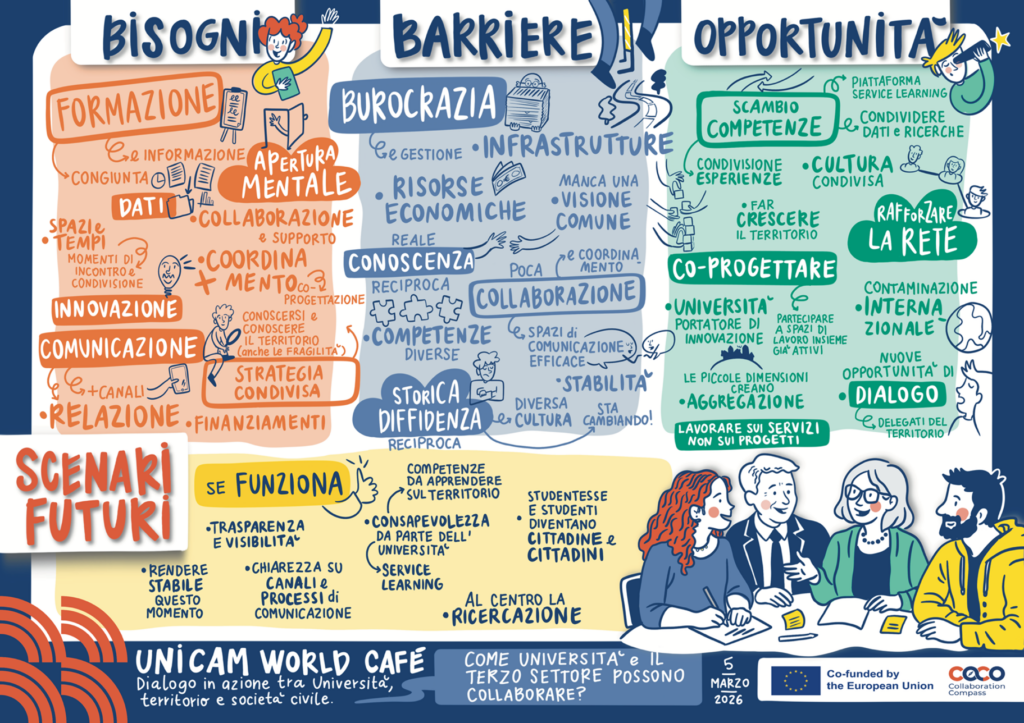
That framing also shapes the substantive format the guidelines draw on. The methodology of the COCO DMPs draws on the World Café format of organising discussion into three sequential rounds focused on Needs, Barriers, and Opportunities.
Across all three phases, the guidelines make a consistent argument about the role of universities: they are hosts of public reasoning, not expert authorities setting the agenda. That distinction shapes everything from how participants are invited to how facilitation is expected to proceed.
In March 2026, three partner universities put those guidelines into practice for the first time, using them to structure conversations around a question central to the COCO project: what is actually getting in the way of sustained collaboration between universities and civil society?
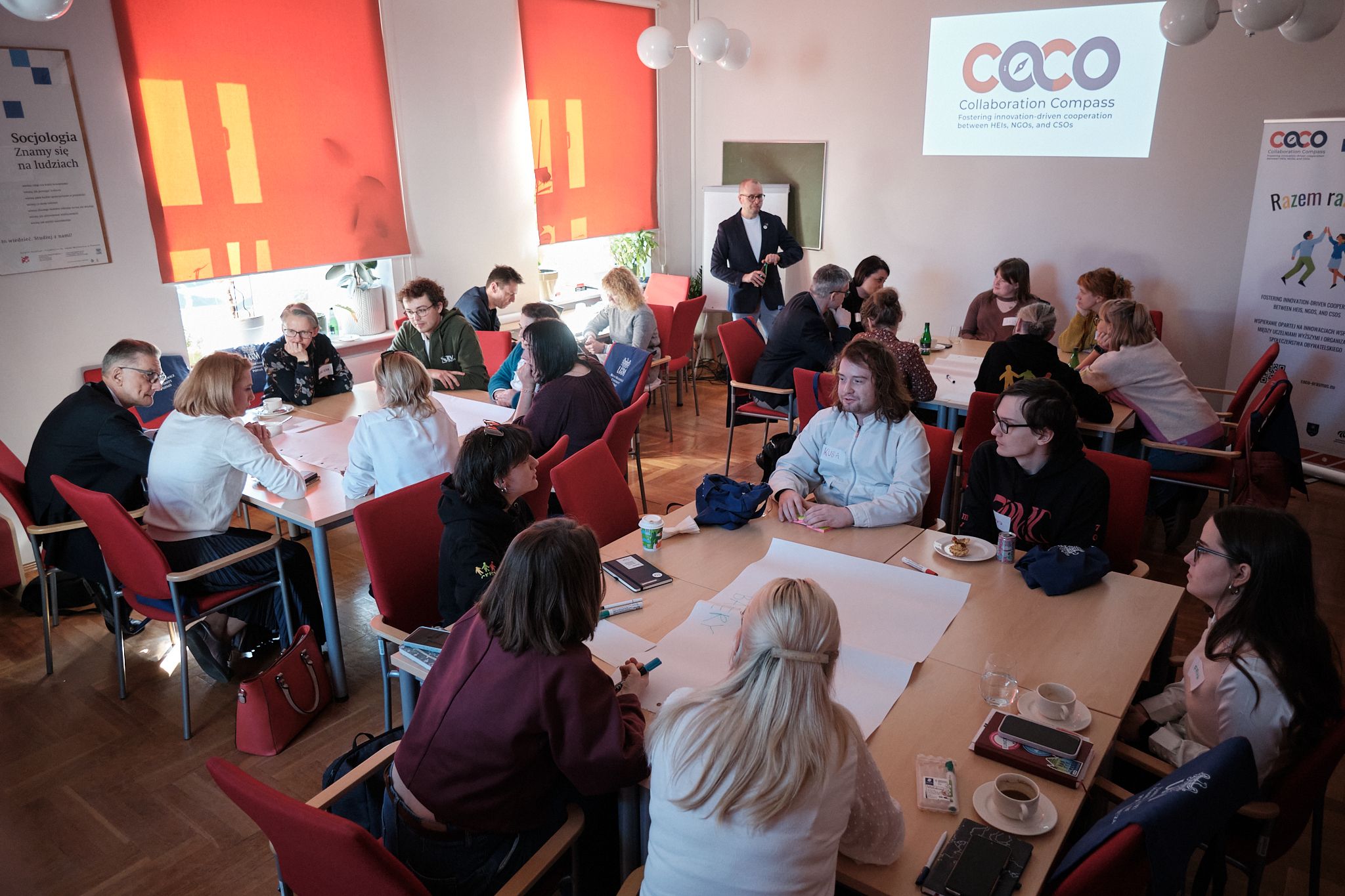
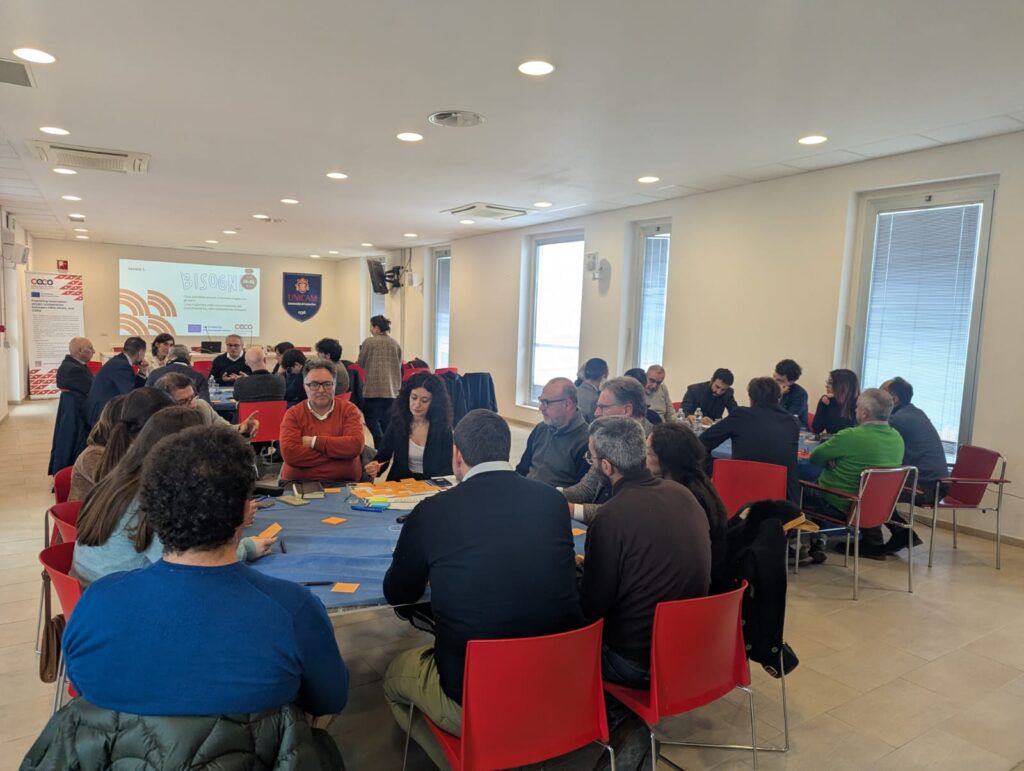
The University of Camerino hosted the first session on 5 March, bringing together civil society organisations, local institutions, and university representatives in the Marche region. Adam Mickiewicz University in Poznań followed on 6 March with a group that included civil society organisations, students, university staff, and local government representatives. On 25 March, Aalborg University partnered with byStudents, a student-led civic engagement initiative, to hold the final session at Studenterhuset in Copenhagen. Together, the three events involved more than 40 participants across three different national contexts. Facilitators worked from the same methodological framework throughout, adapting where the setting required it, and the material that emerged points toward some consistent patterns.
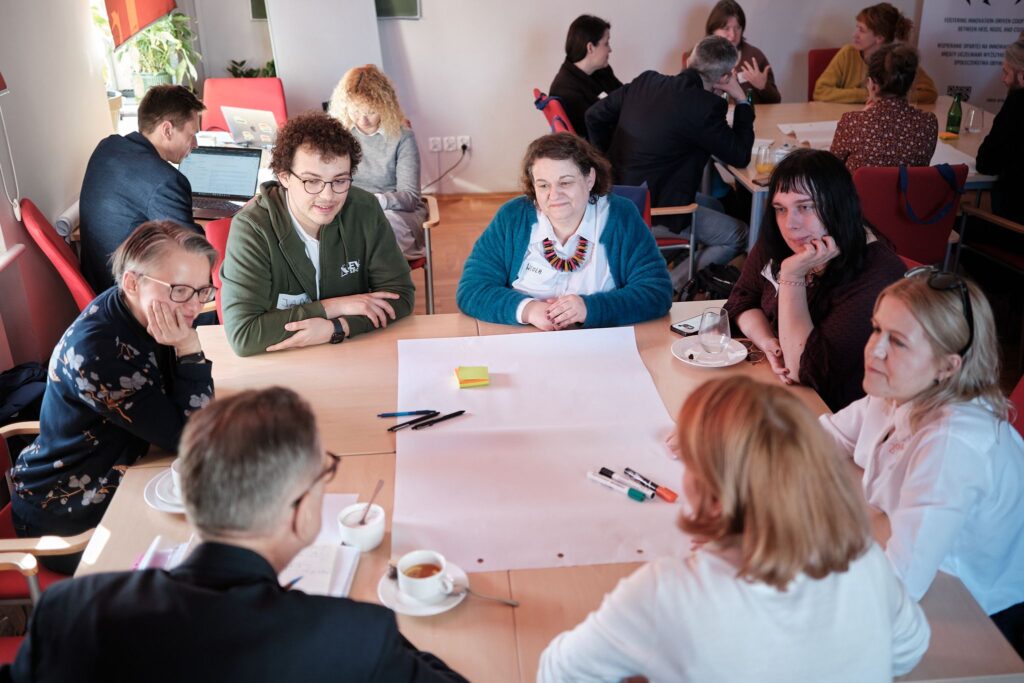
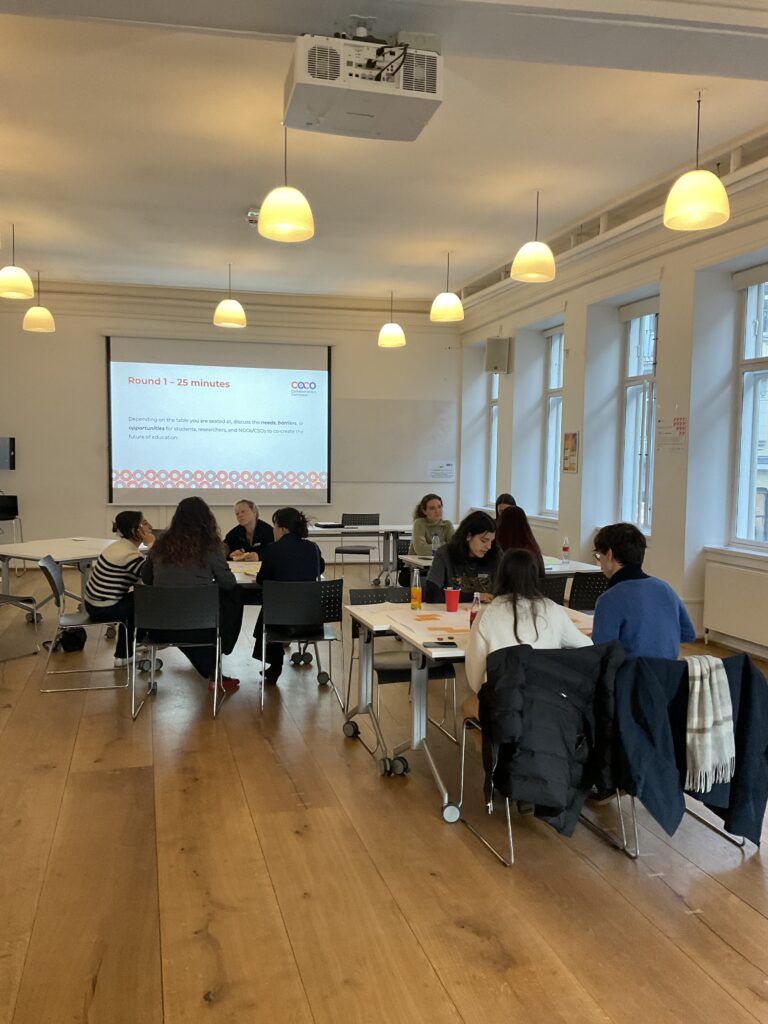
The material gathered from Camerino and Copenhagen showed that participants were clear that the barriers to collaboration are not primarily about willingness. The motivation to work across the boundary between universities and civil society exists on both sides. The harder problem is structural: how institutions that operate on quite different timelines and with fundamentally different resources can build relationships that last beyond a single project.
The findings from Copenhagen also drew attention to the position of students. Despite being well-placed to act as a bridge between universities and civil society, students face academic pressures and poorly defined institutional incentives that make sustained civic engagement difficult to pursue alongside formal study. These findings are provisional until the Poznan material is incorporated, but the consistency across two quite different national settings is already notable.
The Summary Report will be published on this website in the coming weeks and will include the full findings from all three sessions. It will feed directly into the next phase of the COCO project: the development of mentorship pathways between academic staff and civil society practitioners. The Guidelines for Deliberative Mini-Publics are already publicly available through this website, written as a practical resource for facilitation teams with or without prior experience of deliberative methods.